What exactly is a “personal brand”? Author Tom Peters originally coined the term in a 1997 article for Fast Company magazine, where he argued:
“You’re not defined by your job title or employer. You’re defined by the unique value you bring—and you must market yourself as a brand to survive and thrive in the modern workplace.”
We’re all familiar with brands. Corporations have spent decades training us to recognize their logos, internalize their mission statements, and associate them with specific products and values. Companies like Coca-Cola, Starbucks, Apple, and Patagonia have carefully cultivated their branding to align their organizations with distinct values and ethos.

A personal brand is how the world perceives you—the impression you leave on others through a unique combination of your skills, values, and experiences that shape your professional identity.
Today, personal brands are increasingly shaped in the digital realm, encompassing social media profiles, online presence, and one’s overall digital footprint. Personal branding now encompasses both offline interactions and, predominantly, online representation.
Prominent figures like Oprah Winfrey, Warren Buffett, and Martha Stewart exemplify the power of strong personal branding. Through consistent messaging and authentic presence, they’ve earned solid reputations, public trust, and lasting respect.

At first, you might wonder: Why does a personal brand even matter? Here’s why it does.
In 2009, a young and relatively unknown Taylor Swift accepted the MTV Best Female Video award. Mid-speech, Kanye West stormed the stage, grabbed the microphone, and stunned the crowd: “Beyoncé had one of the best videos of all time!” The interruption overshadowed what should have been her moment.
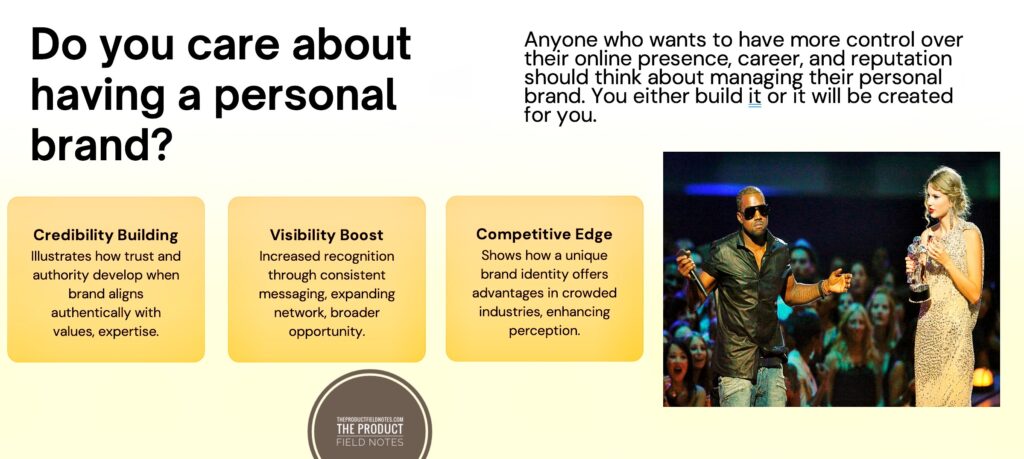
Swift immediately became a sympathetic figure—the underdog. But rather than letting that moment define her, she strategically leveraged it. Through storytelling, resilience, and transforming personal challenges into art, she expanded her audience and reshaped her career trajectory. That incident became a turning point, enabling her to establish a deep loyalty to her personal brand.
The lesson? You already have a personal brand, whether you realize it or not. You either create it yourself, or circumstances and others shape it for you. By actively building your personal brand, you enhance your competitive edge, increase your visibility, and establish your credibility.
Taylor Swift exemplifies someone who has expertly crafted and managed her personal brand—turning even challenging moments into opportunities.
We must own our narrative—and that means actively shaping our personal brands.
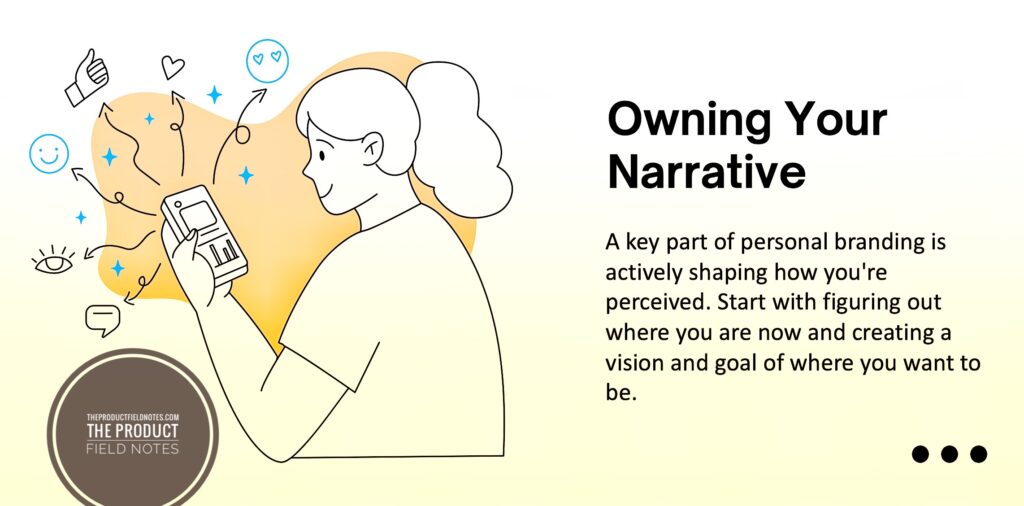
The first step is auditing where you stand right now. What do people currently see when they encounter you? What vision or goals do you have for your ideal personal brand?
Self-Assessment: Tips for Evaluating Your Personal Brand
Audit your online presence. Start by Googling yourself. What appears? What impression does it create? Review your social media profiles with fresh eyes—these platforms are often the first place people form opinions about you.
Identify and communicate your core values. Clean up your digital footprint by curating your posts and content. Ensure that what people see genuinely reflects who you are and what you stand for.
Think long-term. Your personal brand isn’t built overnight. Reflect on how today’s choices will impact your reputation tomorrow.
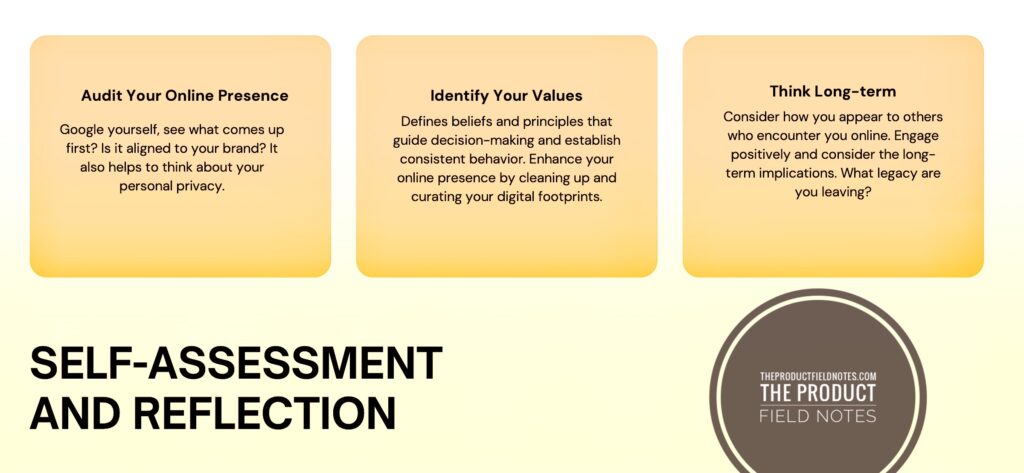
Our online presence can outlive us—a reality unique to our time in human history. The digital footprints you leave today may exist forever. What kind of legacy do you want to create? What impression will remain long after you’re gone?
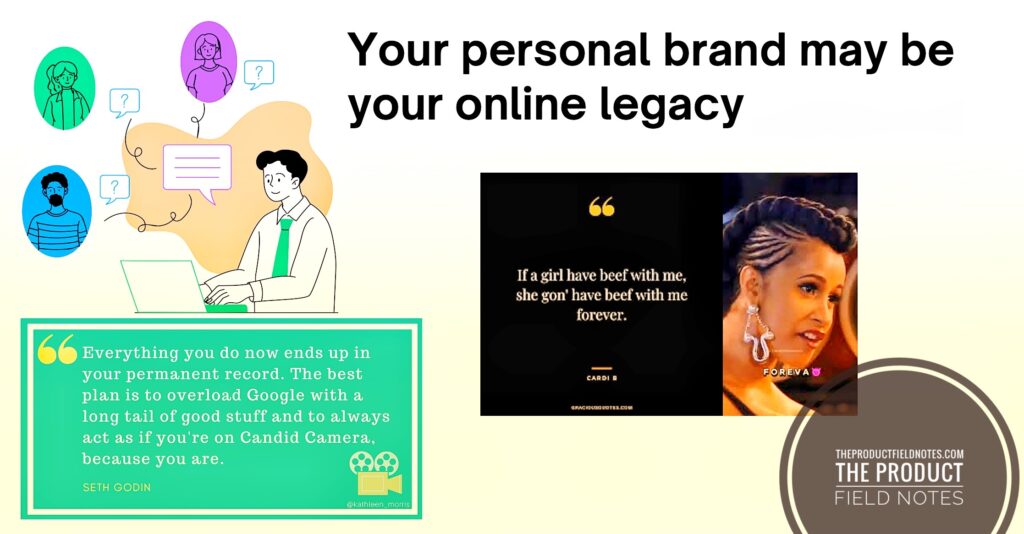
As Seth Godin puts it:
“Everything you do now ends up in your permanent record. The best plan is to overload Google with a long tail of good stuff and to always act as if you’re on Candid Camera, because you are.”
Consistency is key when building a personal brand.

Taylor Swift exemplifies this principle. She has built her brand through consistent interaction with fans, intentionally crafting a narrative that they can believe in. Whether through her music, values, social media presence, or public appearances, Swift continuously reinforces who she is and what she stands for.
Two influential voices offer perspective on personal branding—one from before the internet era, one from its early days.
Tom Peters, who coined the term “personal branding,” emphasized its importance:
“All of us need to understand the importance of branding. We are CEOs of our own companies: Me Inc. To be in business today, our most important job is to be the head marketer for the brand called You.”
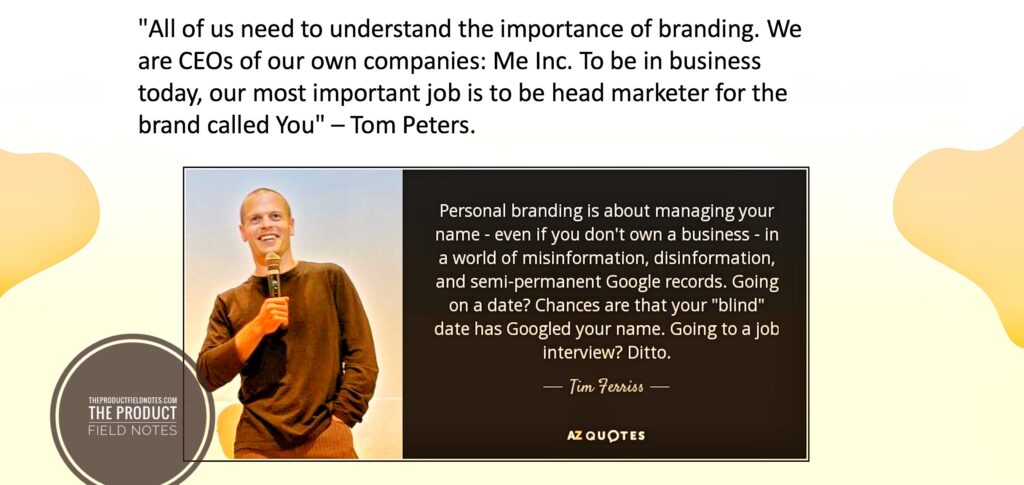
Tim Ferriss builds on this, highlighting our digital reality:
“Personal branding is about managing your name—even if you don’t own a business—in a world of misinformation, disinformation, and semi-permanent Google records. Going on a date? Chances are that your ‘blind’ date has Googled your name. Going to a job interview? Ditto.”
The time to shape your personal brand is now.